Hair loss in Bali: the science, and what helps
It usually starts at the mirror. Villa bathrooms have hard overhead light, and under it the temples look further back than they did at home, or the crown shows more scalp than you remember. Then you look at the drain. Most shedding that begins on a trip is temporary and reverses on its own. Some thinning does not, and telling the two apart early changes what you can do about it.
Up front
Sudden, all-over shedding that starts a few weeks into a trip is usually telogen effluvium: a temporary shift in the hair cycle set off by illness, stress, rapid weight loss or a hard run of travel. The shedding normally settles within 3 to 6 months once the trigger passes, and full thickness takes a few months more. Gradual thinning at the temples, crown or part line is more likely androgenetic hair loss, known as male pattern baldness in men and female pattern hair loss in women, which continues slowly without treatment. Low iron and thyroid problems can drive or worsen either, and low vitamin D often turns up alongside. One consultation and a focused blood panel usually settle which of the two you have. At Bali Doc the first GP consultation is free and happens by video, and the doctor can arrange the bloods with home collection across much of the island.
Talk to a doctor about hair loss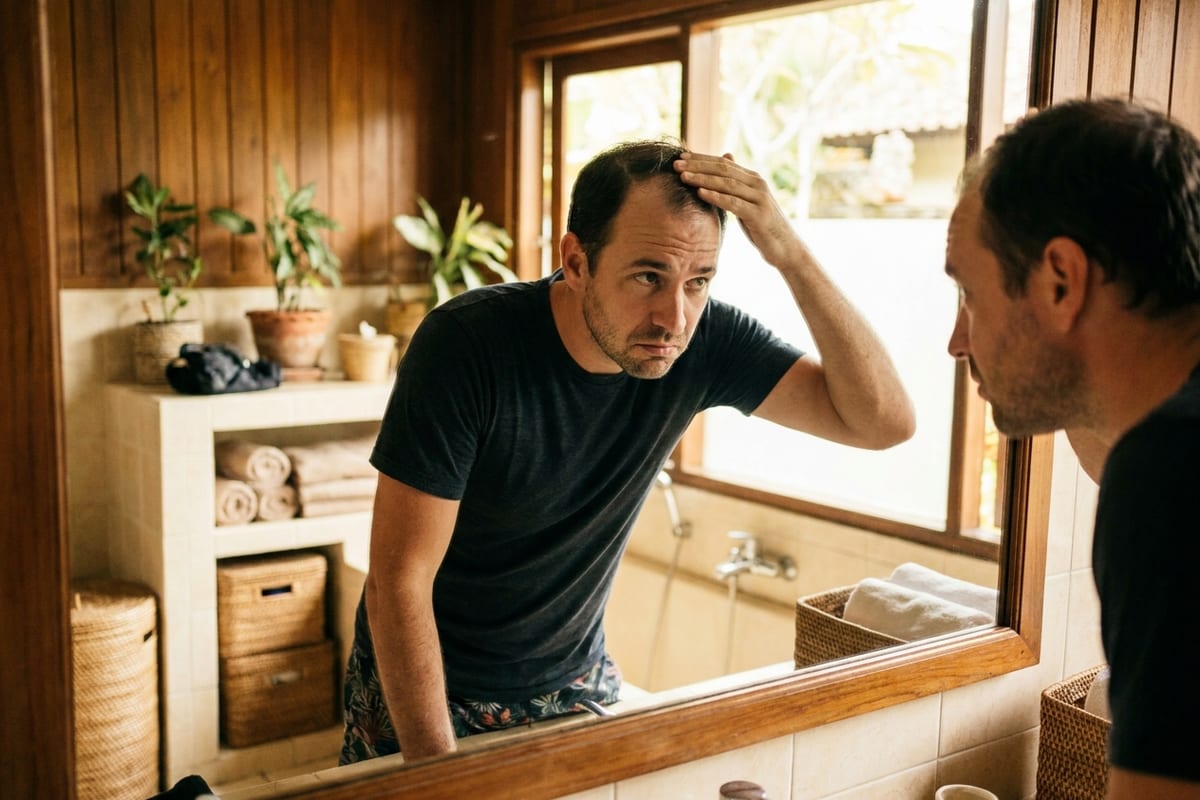
How much daily shedding is normal?
Every follicle runs its own cycle: anagen (active growth, 2 to 6 years), catagen (a short transition), then telogen (rest for around three months, after which the hair is released). At any moment roughly 85 to 90% of your hairs are growing and about 10% are resting, so losing 50 to 100 hairs a day is normal.
Counting hairs is a poor test. If you wash every third day because the heat makes a daily rinse feel optional, one wash releases three days' worth at once, and long hair looks more dramatic on a wet bathroom floor than short hair ever will. The signal that matters is change: a ponytail that feels thinner in your hand, more scalp visible in photos taken weeks apart, a part line that has quietly widened, or a hairline you now find yourself checking in every mirror you pass.
Is it telogen effluvium or pattern hair loss?
Almost all hair loss in otherwise healthy adults falls into these two groups, and they behave very differently.
| What you notice | Telogen effluvium (temporary shed) | Pattern (androgenetic) loss |
|---|---|---|
| How it starts | Suddenly, usually 2 to 3 months after a trigger | Slowly, over years |
| Where | All over the scalp, including the sides and back | Temples and crown in men, a widening part line in women |
| The hairs themselves | Full-length hairs with a small white bulb at the root | Hairs come back finer, shorter and paler before they stop |
| Hairline | Usually unchanged, the ponytail just feels thinner | Visibly receding or a widening part |
| What happens next | Peaks, then settles over 3 to 6 months once the trigger passes | Continues gradually without treatment |
Pattern loss is driven by genetics and by sensitivity to DHT, a hormone that gradually miniaturises susceptible follicles so each cycle produces a finer, shorter, paler hair until the follicle stops bothering. You can have both conditions at once. That is why a heavy shed sometimes reveals pattern thinning that had been creeping along quietly for years, and why some men date their baldness to a bout of dengue that only pulled back the curtain.
Why is my hair falling out after travelling?
Telogen effluvium is the body deprioritising hair while it deals with something more urgent. A large batch of follicles is pushed out of the growth phase at once, rests together, and then sheds together. Common triggers include:
- A feverish illness or a rough gut infection, including Bali belly or dengue.
- Long-haul flights, weeks of broken sleep and a hard stretch of stress.
- Rapid weight loss, a restrictive diet, or under-eating because you are busy and the heat kills your appetite.
- Low iron stores, common in women and on plant-heavy travel diets.
- Hormonal shifts: postpartum, starting or stopping contraception, thyroid problems or PCOS. Our guide to hormone health while travelling goes further into these.
- Surgery, a general anaesthetic, or starting a new medication.
The catch is the delay. Shedding usually appears 2 to 3 months after the trigger, by which time the fever is a story you tell at dinner and the cause feels unrelated. That delay is also the good news: if you can name the trigger and it has passed, the cycle normally resets itself without any treatment at all.
A doctor can walk back through the last six months and find the trigger in about 20 minutes. The first GP consultation is free.
Do helmets and scooter sweat make it worse?
A helmet does not kill follicles and does not cause pattern baldness, whatever the man at the warung tells you. What a helmet does is trap heat and sweat against the scalp for hours, in a foam liner that never fully dries in 80% humidity. That is a good environment for folliculitis (small itchy pustules around the follicle openings) and for the flaking, greasy irritation that most people call dandruff. Neither destroys hair, but an itchy scalp gets scratched, and a scratched, inflamed scalp sheds and breaks more than a calm one.
Take the liner out and wash it, then dry it in the sun rather than leaving the helmet in a damp bathroom. A thin cotton skull cap under the helmet absorbs the sweat and can be washed daily, which is easier than washing a helmet. Rinse your scalp after a long, sweaty ride instead of sleeping in it. If flaking or itch persist, an anti-dandruff shampoo from any apotek is a reasonable first move, and pustules or scalp pain deserve a proper look rather than a stronger shampoo. One practical note for riders on topical treatment: put it on in the evening when the helmet is off for the day, and let it dry fully before it meets foam padding or a pillow.
What about Bali's water, sun and salt?
Hard water, chlorine, salt water and strong sun damage the hair shaft rather than the follicle. That causes breakage: short broken pieces with no white bulb, split ends, and a straw-like feel. Rinse after the pool or ocean, condition, and cover your head in midday sun. Loosen tight buns and braids too, because constant tension can cause traction alopecia, which does become permanent if it goes on for years. Shedding from the root, though, is a medical question, not a plumbing one.
Which blood tests are worth doing?
A focused panel finds the causes that can be corrected. In most cases that means ferritin, a full blood count and thyroid function as the headline tests, plus vitamin D, B12 and zinc, which are cheap to check and occasionally the culprit, and hormone markers where the history points that way: irregular periods, new facial hair or severe acne in women.
Ferritin is measured separately for a reason. A normal haemoglobin does not rule out empty iron stores, and many clinicians want ferritin comfortably above about 30 ng/mL when hair is the concern, though the exact target is still argued over. More is not better with supplements, either. Iron taken without a proven deficiency accumulates in the body, excess selenium can itself cause hair to fall, and high-dose biotin distorts thyroid and cardiac lab results badly enough to send people down the wrong diagnostic path, so mention it to whoever takes your blood. Test first, correct what is low, leave the rest alone.
What happens in a hair loss consultation?
Most people put this off because they imagine a scalp examination under a bright light with a stranger's hands in their hair. On video it is mostly conversation. The doctor is trying to place your hair loss in one of the two boxes above, so expect questions about what was going on two to three months before the shedding started: a fever, a stomach infection, a surgery, a crash diet, a new medication, a brutal month. Then family history on both sides, how long the thinning has been going on, whether the scalp itches or hurts, how you wear and treat your hair, and for women, periods, contraception and any recent pregnancy.
Three photographs make the call far more useful, and they are easier to take before you dial in. Shoot the crown from directly above in daylight, ideally with someone else holding the phone. Shoot the hairline straight on, hair dry and pushed back. Shoot the part line with the hair parted where you normally part it. If you have been collecting the hairs after a wash, photograph them on a plain surface: full-length hairs with a small white bulb at the root read very differently from short broken fragments. The doctor may also ask you to take a small bunch of about fifty hairs and pull gently. A few hairs coming away is normal. A visible handful suggests active shedding.
If bloods are needed, a phlebotomist comes to your villa or hotel across much of the island, and the routine panel usually reports back within about a day. A hair panel generally costs less than a good dinner in Seminyak, and you see the exact price and confirm it before anything is booked, so nothing arrives as a surprise. The results come back with a doctor explaining what each number means for your hair, rather than as a PDF full of asterisks.
What works for hair loss?
Treatment follows the diagnosis, which is why the order matters. Depending on what the assessment shows, a doctor may discuss:
- Correcting the driver. Treating low iron, a thyroid problem or a vitamin D deficiency can restore growth on its own when that is what caused the shed.
- Eating enough. Hair is metabolically expensive and the first thing the body cuts when calories or protein run short. Not glamorous advice, and frequently the missing piece.
- Topical minoxidil, available over the counter, is the best-evidenced self-care option for pattern loss in both men and women. It prolongs the growth phase. Use it consistently, exactly as the label directs, expect a temporary increase in shedding in the first weeks as resting hairs are pushed out, and know that it works only while you keep using it.
- Prescription options for pattern loss exist and can be effective. Whether any of them suits you is a decision the doctor makes at their own clinical discretion, after weighing the benefits and risks with you, and some are unsuitable in pregnancy or when trying to conceive. A doctor's assessment is required before any prescription. Some medication, including controlled substances, requires a specialist consultation and may be restricted under Indonesian law.
- Scalp care. A red, flaky or itchy scalp sheds more, so calming the inflammation is part of the treatment rather than a side quest.
- Microneedling, platelet-rich plasma and low-level light devices are offered in clinics here and show promise, but they rest on smaller studies. Treat them as add-ons once a medical plan is in place. Transplant surgery is considered only for stable pattern loss, and only after medical treatment has held the line for a while.
What does not work is worth naming too: hair vitamins when you are not deficient, expensive shampoos sold against root-level shedding (they condition the shaft, which is not where the problem lives), and scalp massage, which is pleasant and does nothing measurable. No approach works for everyone, and outcomes vary between people with the same diagnosis.
Can you buy minoxidil in Bali?
Yes. Topical minoxidil sits on the shelf at apotek across the island without a prescription, in Kuta, Canggu, Ubud and any Denpasar pharmacy of reasonable size. Ask for it by name at the counter: the word is understood, and staff will show you what they have, usually a mix of locally made and imported brands. Stock varies from shop to shop, so if one apotek is out, the next one along the road probably is not.
Two strengths are common, 2% and 5%, in either a liquid solution or a foam. The 5% is the usual choice for men. Women are more often started lower or on a once-daily routine, and if pregnancy is possible that conversation belongs with a doctor before the first bottle, not after. The liquid contains propylene glycol, which is the usual reason people report an itchy, greasy scalp; the foam dries faster and suits a climate where you sweat within ten minutes of leaving the house. Prices differ between brands and between pharmacies, so ask what a bottle costs and how long it lasts, then work out the monthly figure before you start. This is a running cost rather than a one-off, since the effect fades within a few months of stopping.
Applying it here has its own quirks. It goes on a dry scalp, not a scalp still damp from the shower, and it needs time to dry before a helmet, a pillow or a swim. Evening application survives a Bali day better than a morning one that is sweated off by eleven. Wash your hands afterwards unless you want to find out where else it works. And if you have adopted a villa cat, keep the bottle away from it and let your scalp dry before it climbs on you: minoxidil is seriously toxic to cats, which nobody mentions on the box.
We arrange the panel that fits your history, collect at your villa across much of Bali, and a doctor explains the numbers.
How long before you see a change?
Hair grows roughly a centimetre a month, so patience is part of the treatment. Realistic milestones look like this:
- Weeks 0 to 6: nothing visible. With topical treatment, shedding may briefly increase.
- Months 3 to 4: after an effluvium, short new hairs appear along the hairline and part.
- Months 4 to 6: the first fair moment to judge treatment for pattern loss. Less shedding usually comes before more density.
- Months 6 to 12: the verdict. For pattern loss, losing no further ground is a real result.
Take one photo a month: same spot, same light, dry hair, parted the same way. Memory is unreliable about hair, and photographs settle arguments with yourself.
Only here for two weeks?
Then the sensible plan is different from the one a resident gets. Take the three photographs now, while you are worried enough to remember, because in six months they are the only baseline you will have. If a trigger fits (a fever, a bad gut week, a hard diet), the blood panel is worth doing early in the trip so the results land before you fly and you can hand them to your own doctor at home. What is rarely worth doing is impulse-starting a daily treatment on holiday that you will abandon at the airport, because starting and stopping gives back whatever ground you gained.
If you live here or you are staying a season, the full pathway makes sense: baseline bloods, a plan, and reviews at three and six months, with the photographs to check the plan against. Hair is one of the few things in medicine where the follow-up appointment is the whole point.
Hair loss in women: what is different
Women shed for the same reasons men do, plus several men do not have. Postpartum shedding classically starts around three months after birth and can be alarming in volume; it is the hair that was held on to during pregnancy leaving all at once, and it settles over the following six to twelve months. Starting or stopping hormonal contraception can trigger the same delayed shed. Heavy periods plus a plant-heavy travel diet is the standard route to low iron stores, which is why ferritin is the first number we look at rather than the last.
Female pattern hair loss looks different from the male version: the part line widens while the frontal hairline mostly stays put, and the change is easiest to see in a photograph of the crown rather than in the mirror. Irregular periods, new facial hair or severe acne alongside the thinning point towards a hormonal cause worth testing for, and our guide to hormone health while travelling covers what that assessment involves. If you are pregnant, breastfeeding or trying to conceive, say so early: it changes which treatments are on the table.
When is hair loss a red flag?
Book a proper assessment promptly, rather than waiting out the usual few months, if you notice:
- Smooth, round bald patches appearing over days or weeks.
- Scalp pain, burning, redness, scaling or pustules, or shiny skin where the follicle openings have disappeared. This can indicate a scarring alopecia, where the follicle loss is permanent, so it needs prompt in-person specialist care.
- Hair loss alongside fever, unexplained weight loss, joint pain, a new rash or very heavy periods.
- In women, new facial hair, a deepening voice, irregular periods or severe acne.
- Hair loss in a child, or loss that starts soon after a new medication.
- Shedding that is still heavy after six months, or that keeps accelerating.
Those coin-sized smooth patches have a name most people have already found online by the time they ask us: alopecia areata. The immune system switches off individual follicles, which is why the skin looks normal rather than scarred and why patches often regrow on their own over months. It still deserves an in-person look. Treatment can shorten the course, the pattern of loss guides what to expect, and it occasionally travels with thyroid problems worth checking.
How Bali Doc handles it
Your first GP consultation with a licensed doctor is free and happens by video, so you can start from your villa with the photos already on your phone. The doctor takes a proper history, works out which pattern fits, and arranges the blood tests that match your situation, with home collection across much of the island. You get the results explained in plain language and a plan you can hold to.
If medication is appropriate, the doctor prescribes at their own clinical discretion and a licensed, BPOM-registered partner pharmacy dispenses and delivers it to your hotel or villa. Bali Doc arranges the care and never prescribes or dispenses itself. We follow up at three and six months, because that is when there is finally something to look at. And if your case belongs with someone in person, we will tell you so.
If you take one thing from this
Photograph it, name the trigger, test before you treat. Sudden diffuse shedding usually ends on its own; patterned thinning does not, and it responds best when it is caught while there is still something to hold. Either way, one consultation and one round of bloods replace months of standing in a bathroom guessing.
This article is general information, not medical advice. A diagnosis requires assessment by a licensed doctor.
Frequently asked
Is hair loss in Bali permanent?
Usually not. Sudden, all-over shedding that starts a few weeks into a trip is normally telogen effluvium, which is temporary: the shedding settles within 3 to 6 months once the trigger passes, and full thickness returns a few months after that. Gradual, patterned thinning at the crown or hairline is more likely androgenetic hair loss, which is progressive but treatable, and earlier is better.
How long does telogen effluvium last?
The heavy shedding phase usually lasts 6 to 12 weeks and settles once the trigger has passed. Because hair grows about a centimetre a month, visible recovery takes longer: many people see short new hairs along the hairline at 3 to 4 months and normal density by 6 to 9 months. If shedding is still heavy after six months, get assessed rather than waiting.
What blood tests check for hair loss?
A focused panel usually includes ferritin (iron stores), a full blood count and thyroid function, plus vitamin D, B12 and zinc, and hormone markers where the history suggests them. A normal haemoglobin does not rule out low iron stores, which is why ferritin is measured separately. These tests find the common causes that can be corrected.
Where can I buy minoxidil in Bali?
Topical minoxidil is sold over the counter at apotek (pharmacies) across the island, in 2% and 5% strengths, as a solution or a foam. Ask for it by name: the word is understood at the counter, and both locally made and imported brands are stocked. Prices differ between brands and between pharmacies, so ask the price per bottle and work out the monthly cost before you commit, since it only works while you keep using it.
How long does topical minoxidil take to work?
Give it time. An increase in shedding during the first weeks is common and expected as resting hairs are pushed out. Most people cannot judge the result before 4 to 6 months, and 12 months gives the full picture. It works only while it is being used, and outcomes vary between individuals.
Do biotin and hair supplements help?
Only if you are deficient, which is uncommon on a normal diet. Supplements do not correct pattern hair loss, and high-dose biotin can distort thyroid and cardiac blood test results, so tell the clinician taking your blood if you take it. Testing first is cheaper and safer than guessing.
Does wearing a scooter helmet every day cause hair loss?
No. A helmet does not damage follicles or cause pattern baldness. What it can cause is a hot, sweaty, occluded scalp, and that environment encourages folliculitis, itch and flaking, all of which make you scratch and can add breakage and shedding on top of whatever else is going on. Wash and sun-dry the helmet liner, rinse your scalp after sweaty days, and treat scalp inflammation rather than ignoring it.
Can Bali's water, sun and salt cause hair loss?
They cause breakage rather than true hair loss. Hard water, chlorine, salt and strong sun leave the hair shaft dry and prone to snapping, which feels like thinning but is a hair-shaft problem, not a follicle one. Broken hairs are short and have no white bulb at the end. Shedding from the root has a medical cause worth identifying.